
In the studio, material rarely disappears. What remains – offcuts, fragments, and residual material – forms a secondary archive, one that continues to shape the work beyond its initial intention.
These remnants are not passive leftovers. They carry the trace of decisions, gestures, and processes already enacted. Edges hold the memory of cutting; surfaces retain marks of pressure, pigment, and handling. What is often set aside as excess begins to function instead as a record, an accumulation of material intelligence embedded within the practice.
Working with these fragments shifts the role of making. Rather than beginning from a blank surface, the process becomes one of return and reactivation, of recognising that material already contains direction.
Residual Material as Archive
Each fragment holds a partial history. A torn edge, a stained surface, or a compressed fold registers a moment within a larger process. When gathered together, these elements form an archive that is neither ordered nor complete, but nonetheless precise.
This archive resists hierarchy. A small off-cut can carry as much weight as a finished surface, depending on how it is reintroduced into the work. The value of the material is not determined by scale or completeness, but by its capacity to extend a line of thinking.
To work with remnants is to read material differently, to recognise that what remains is not separate from the work, but continuous with it.
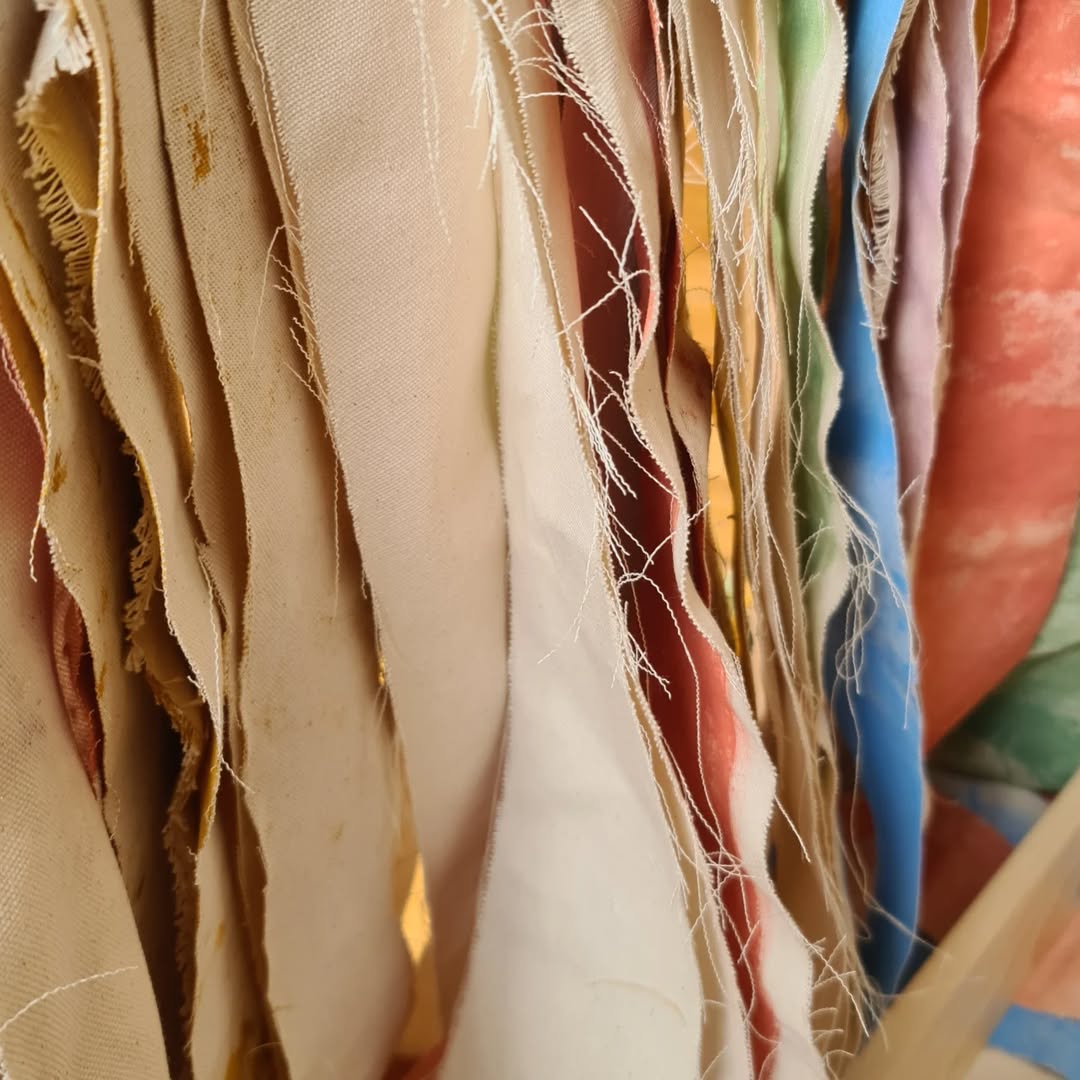
Residual material (studio fragments)

Surface as record of process
Learning Through Surfaces
Material does not behave neutrally. It responds to pressure, absorbs or resists pigment, and shifts under manipulation. These responses are not incidental, they are instructive.
Working with remnants foregrounds these behaviours. Without the expectation of resolution, fragments allow for a closer reading of surface: how fibres break, how colour settles, how edges deteriorate or hold.
What might initially register as failure – tearing, staining, uneven absorption – becomes a form of information. These moments reveal the limits and potentials of the material, guiding future decisions without needing to be replicated exactly.
In this way, the studio becomes less a site of production and more a site of observation, where material is allowed to speak through its responses.
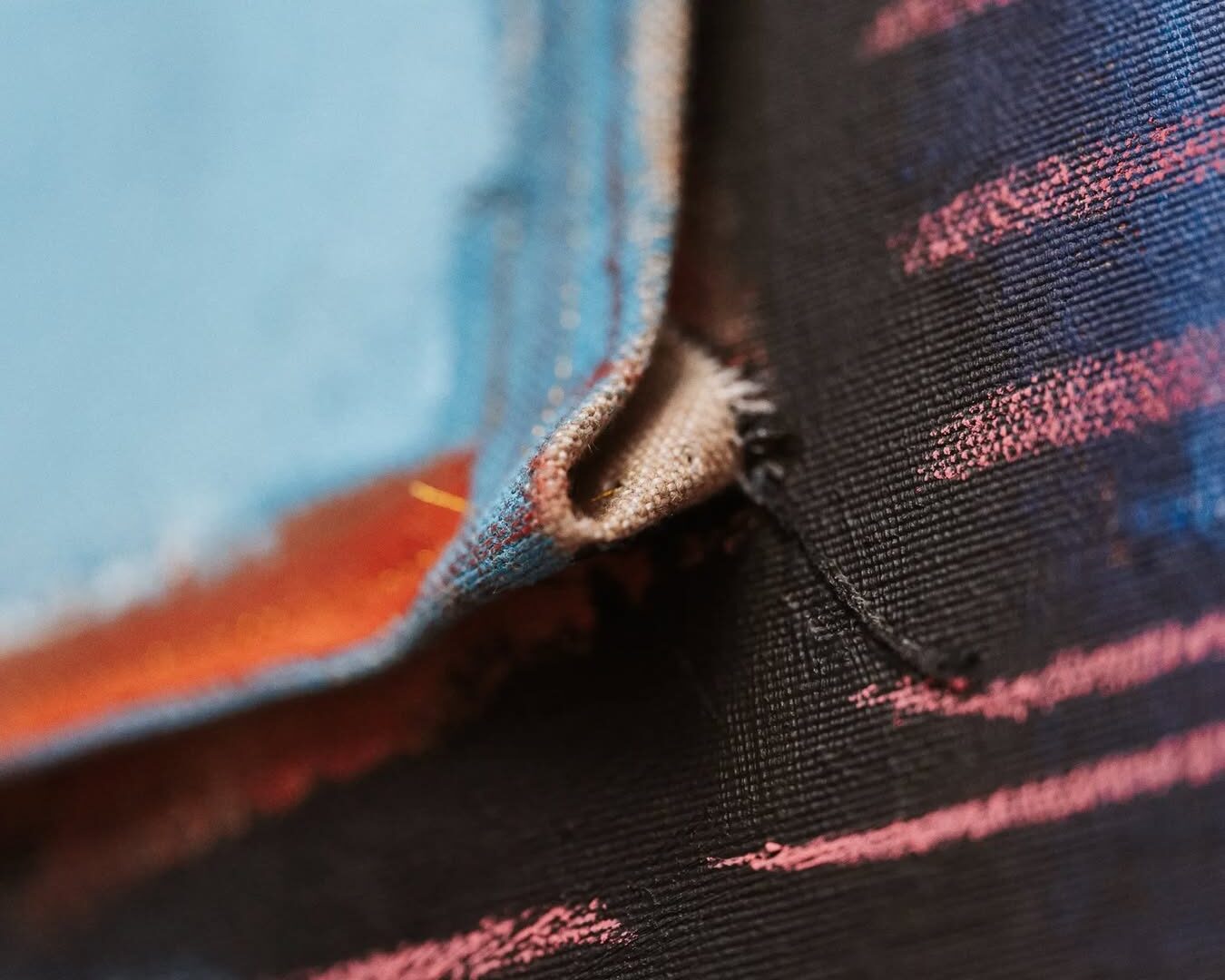
Material response and surface tension
From Remnants to Structure
The transition from fragment to form does not occur through correction, but through recomposition. Elements are brought together not to restore completeness, but to establish new relationships.
Fragments retain their histories even as they are repositioned. A tear remains visible; a stain continues to assert itself. These traces are not concealed but integrated, allowing the work to hold multiple temporalities at once.
This approach resists the idea of the finished object as fixed or resolved. Instead, the work remains open – capable of extension, interruption, and reconfiguration. What was once peripheral becomes structural.
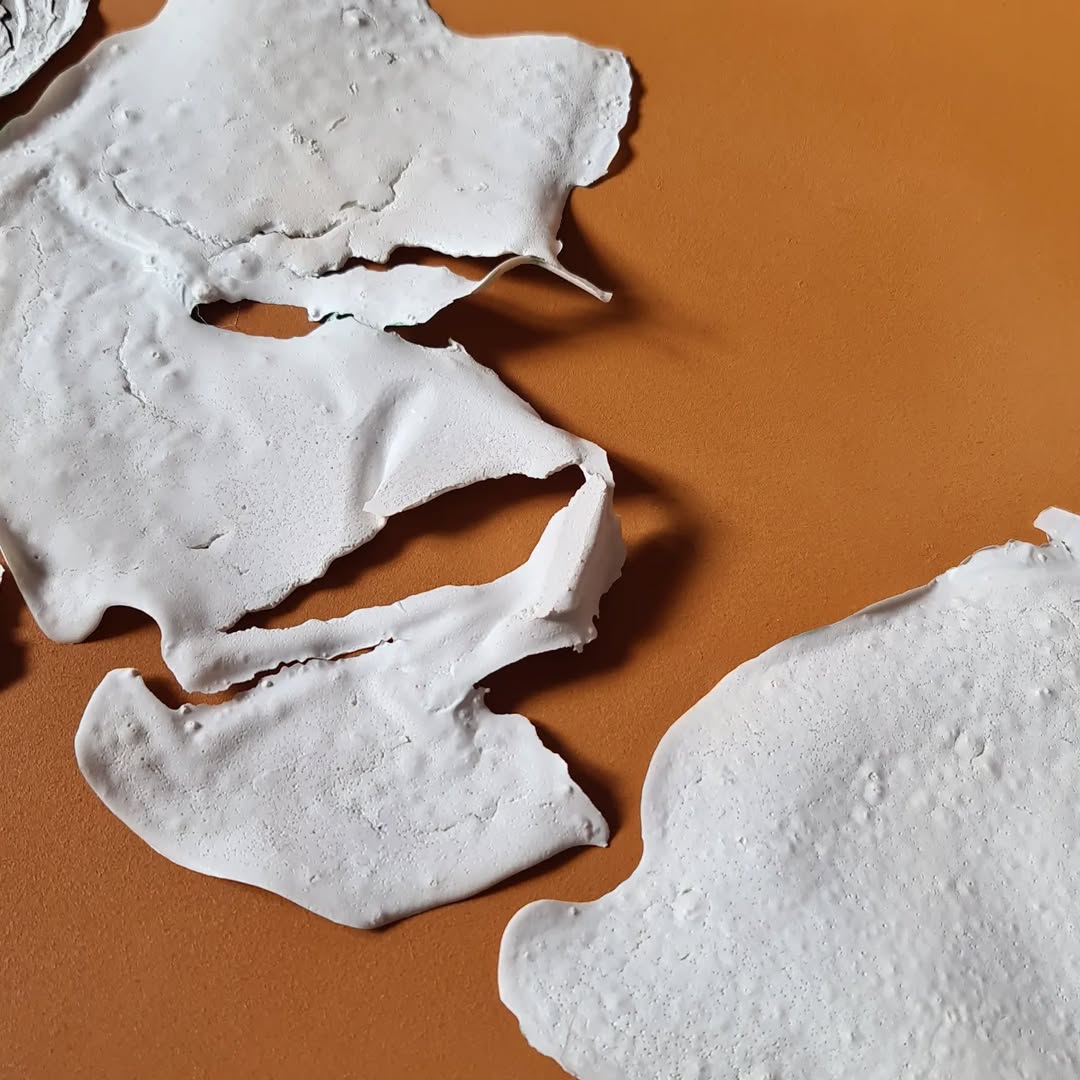
Alive but fragmented | Coral Mini Collection
Acrylic Canvass Sculpture | 2025
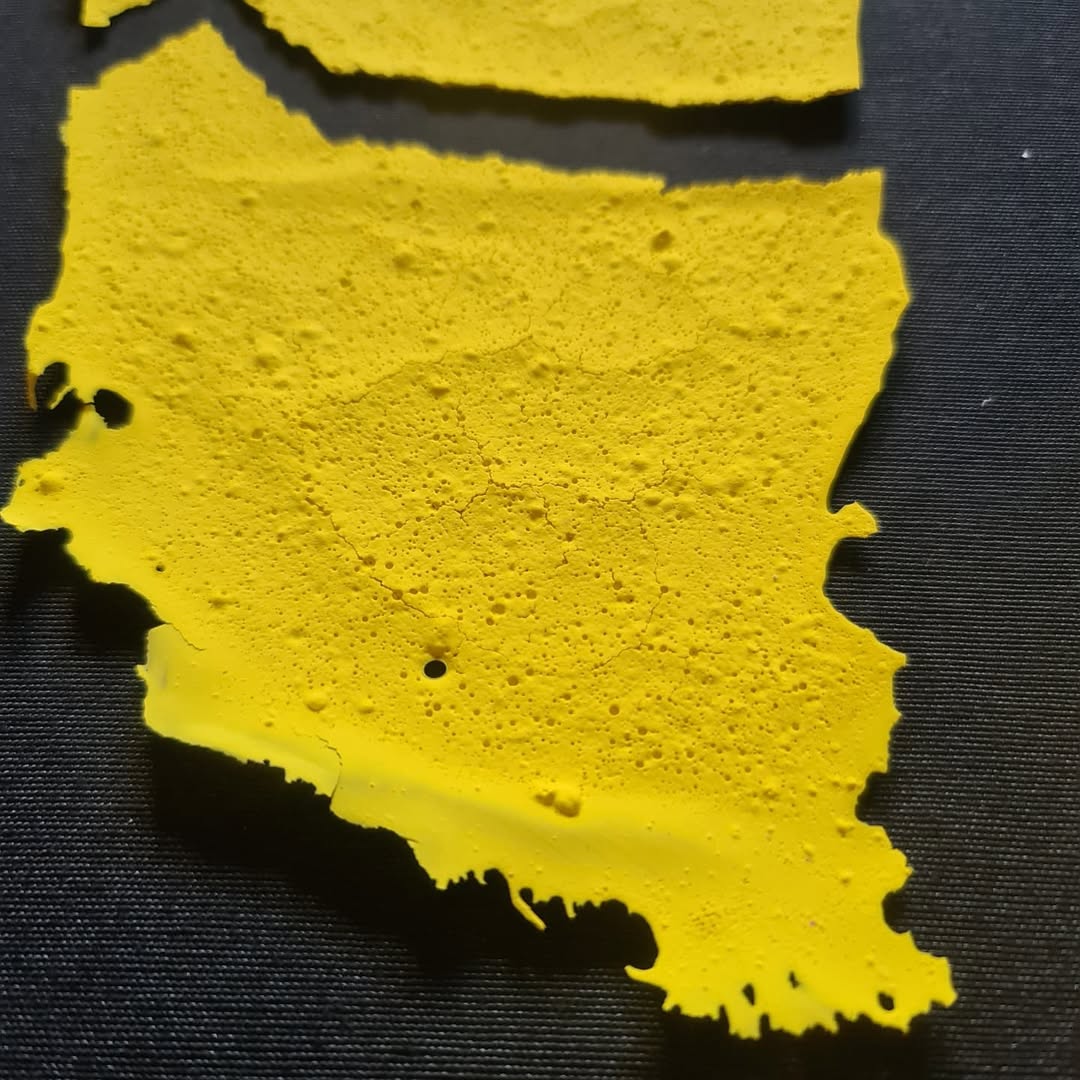
Yellow Coral Road | Coral Mini Collection
Acrylic Canvass Sculpture | 2025
Material Continuity
Working with residual material introduces an ethical dimension to the practice – not as a declared position, but as a condition of continuity.
Rather than treating material as expendable, this approach acknowledges its persistence. What remains is not discarded but carried forward, re-entering the work in altered form. This continuity does not reduce the need for new material, but it reframes its use within a broader cycle.
The studio becomes a space where matter is neither static nor finite, but continually shifting between states – cut, folded, layered, reassembled.
Closing
Residual material does not exist outside the work. It exists as an extension of it, an ongoing accumulation of decisions, gestures, and transformations.
By returning to what remains, the practice resists linear progression. Instead, it folds back on itself, allowing earlier processes to inform new structures. In this movement, fragments are not resolved, but reactivated.
What persists is not the object alone, but the logic through which it was made.
Publication
This text forms part of an ongoing exploration of material practice within the studio, informing the development of works across the Material Elegies series.
Related Writing
-
Metamorphosis: Catalogue Essay
-
Fractured Liminality: Folding, Fragmentation, and the Construction of Memory
-
Spectral Taxonomy: Coral Bleaching and Material Elegy
Series Context
This approach to material – where remnants function as archive and structure – extends across the Material Elegies body of work, informing both the accumulation strategies of Metamorphosis and the material transformations of Spectral Taxonomy. This approach underpins the accumulation strategies of Metamorphosis and the material transformations explored in Spectral Taxonomy.
Studio Note
This text forms part of an ongoing studio research archive documenting the conceptual and material development of the Material Elegies body of work.
Credits
All images © Stephen Russell-Brett
Next Entry >
Metamorphosis: Catalogue Essay