
The artist
Stephen Russell-Brett is a South African contemporary artist working between Pretoria and Dublin. His collections come together under Material Elegies, an ongoing enquiry into memory, ecological change and the practice of attention.
His works ask very little of you when you first arrive, except your presence. Then, if you choose to stay, they continue unfolding long after the first encounter.
Biography

Russell-Brett works across painting, paper sculpture, installation, photography and artist books. Each collection develops its own material language while remaining part of a wider enquiry into how memory, ecological change and lived experience are held through material form.
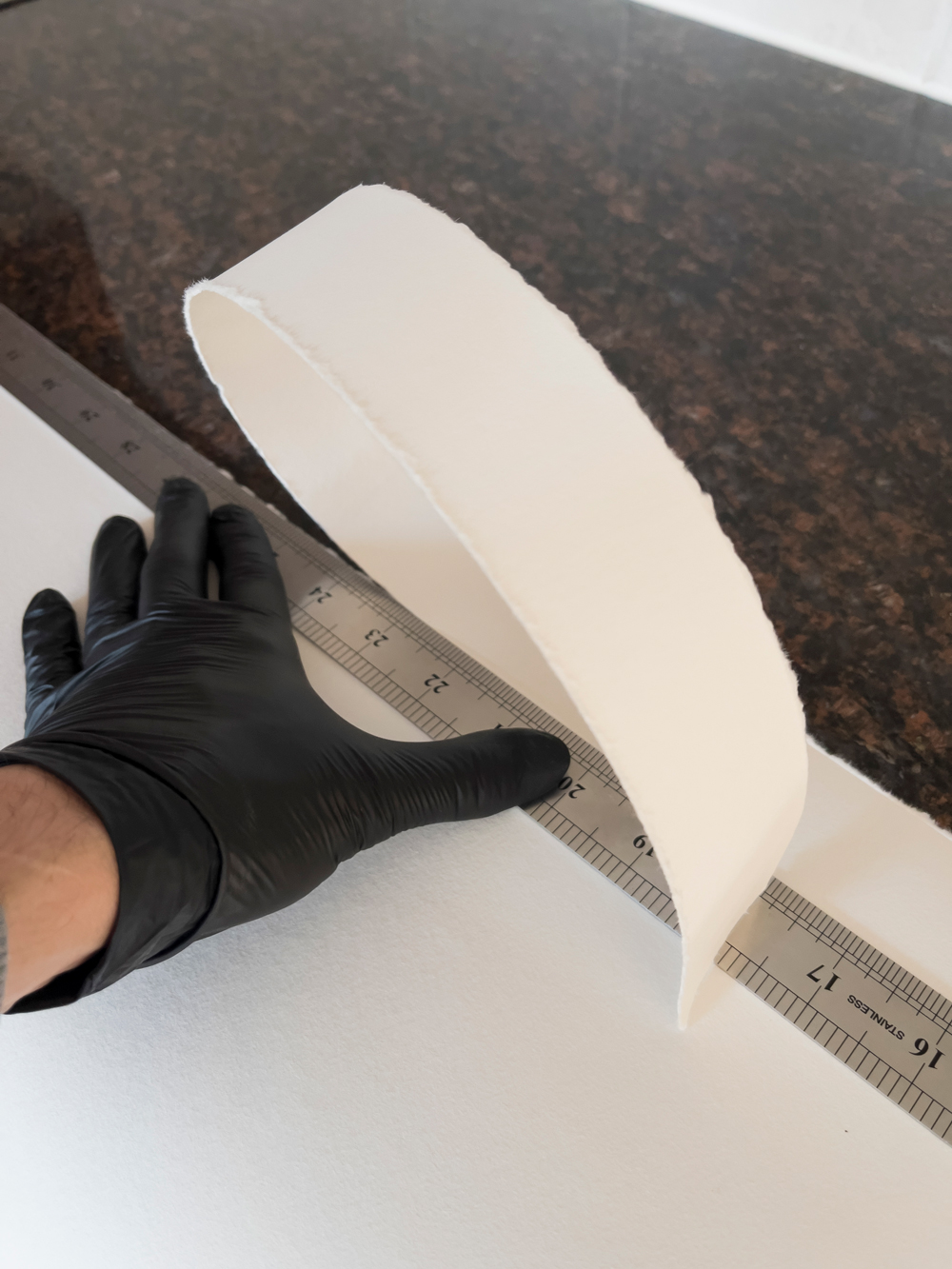
His practice is grounded in close observation. Paper is folded, stained, embossed, torn and layered. Painted surfaces develop through pigment, graphite, ash, linen and other materials. These are selected as much for how they behave as for what they signify.
Observation, lived experience and material fragility converge throughout the practice. Rather than holding change still, the work asks what it might mean to remain with it.
Russell-Brett’s work has received international recognition, including Merit Awards from the Luxembourg Art Prize in 2024 and 2025, for works from Metamorphosis and Spectral Taxonomy.
He completed a BA Honours in Visual Multimedia Arts (Cum Laude) at UNISA, following a BA in Multimedia: Digital Visual Arts. His ongoing research continues to extend the practice through material enquiry, attention and ecological change.

Inspired by attention
To create is to witness – to make visible what is vanishing.
My work begins with attention.
I am drawn to fragile surfaces, quiet transformations and the subtle ways materials register time. Rather than resisting change, I work with it. Paper, pigment, water, gravity and light become active participants in the making.
Attention is not simply a subject within the work. It is a way of working: looking closely, allowing materials to respond, and remaining with what changes long enough for something unexpected to emerge.
Material approach
Materials are selected according to conceptual necessity and for the ways they register pressure, time, handling and change. Paper can suspend like coral lamellae. Pigment can bloom, stain or recede. Linen can hold folds, seams and traces of contact.
Processes within the work include tearing, folding, lamination, staining, embossing, pressure marking, graphite, paint and layered mixed-media surfaces.
The material is not asked to illustrate an idea. Its behaviour becomes part of how the work thinks.
Explore the work
What Remains
Paintings tracing botanical presence, memory and disappearance.
Spectral Taxonomy
Layered paper works responding to coral bleaching and ecological change.
Metamorphosis
Origami installations and photographic works exploring personal loss and remembrance.
Fugitive Landscapes
Paintings of landscapes in transition, where forms emerge, shift and dissolve.