
Fractured Liminality is a diptych built from two intimate source materials: an unsent letter written to my late mother, and a hand-drawn portrait of her. Both works begin as personal documents, yet neither remains in its original form. Through folding, photography, and digital fragmentation, each artifact is transformed into a structure that moves between presence and absence, legibility and loss.
Rather than preserving these materials as static records, the work asks what happens when memory is physically reconfigured. In both panels, the original document is folded into the form of a butterfly, A recurring motif within Metamorphosis and a symbolic structure through which fragility, transformation, and continuation can be held together.
The butterfly is not used as ornament. It becomes a structural device through which intimate materials are translated into spatial and visual form.
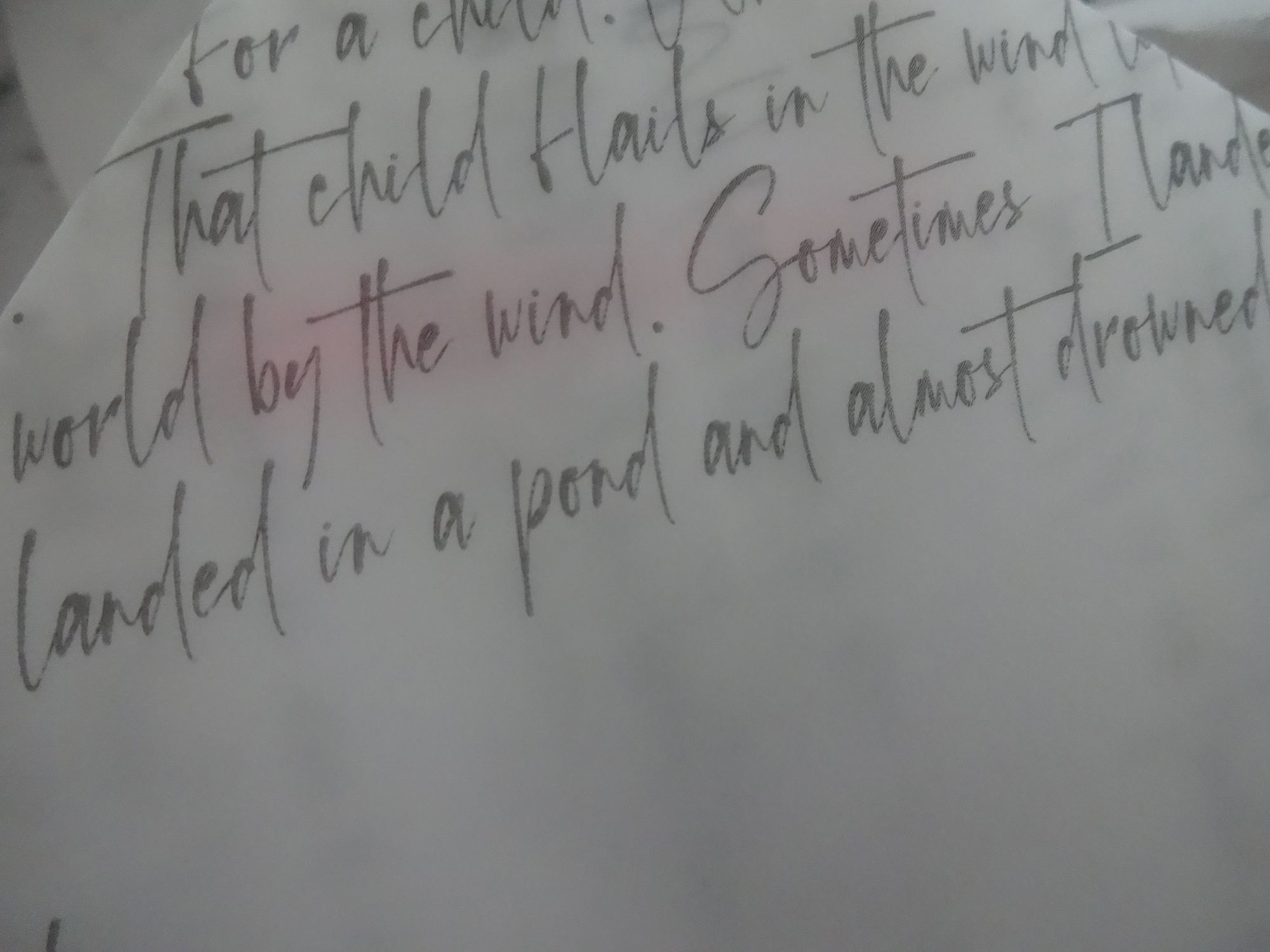
Detail of handwritten letter
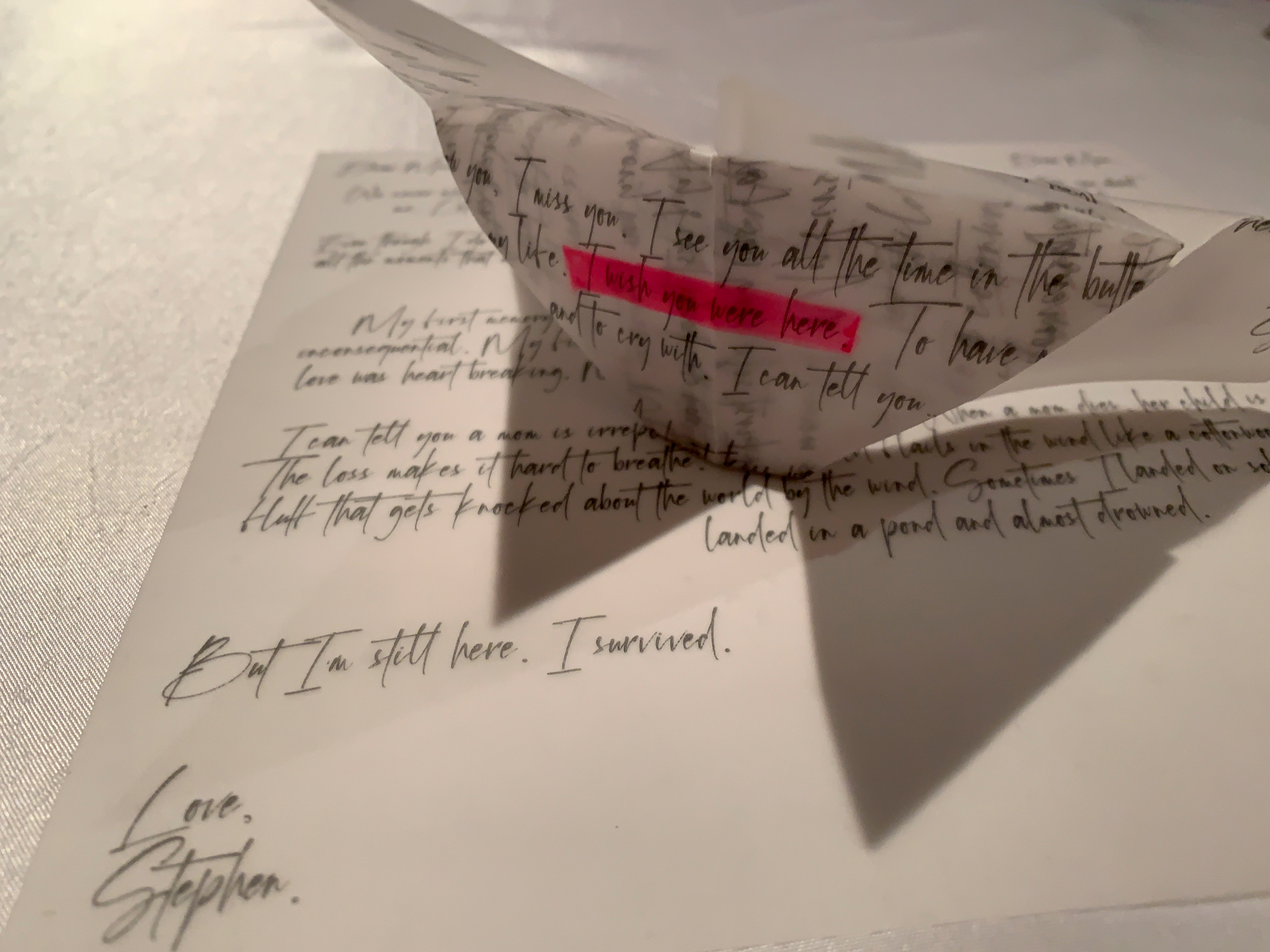
Letter folded into origami butterfly
Letter: From Language to Structure
The first panel, Letter, begins with an unsent letter addressed to my late mother. As an artifact, the letter carries more than language. Handwriting, pauses in ink, and small corrections record a moment of emotional uncertainty.
Once folded, the letter no longer functions primarily as a message to be read. Its linear narrative is interrupted and restructured into sculptural form. The act of folding breaks the continuity of the text, transforming a private document into a physical structure.
Through photography, that fragile origami form is held in suspension. Through digital fragmentation, it is then broken apart and reassembled once again. The resulting image reflects the instability of memory itself – how recollection rarely remains whole.
Fragments of handwriting remain visible across the surface, but the meaning of the letter is no longer carried by sentences alone. It is carried through fold, shadow, translucency, and interruption.
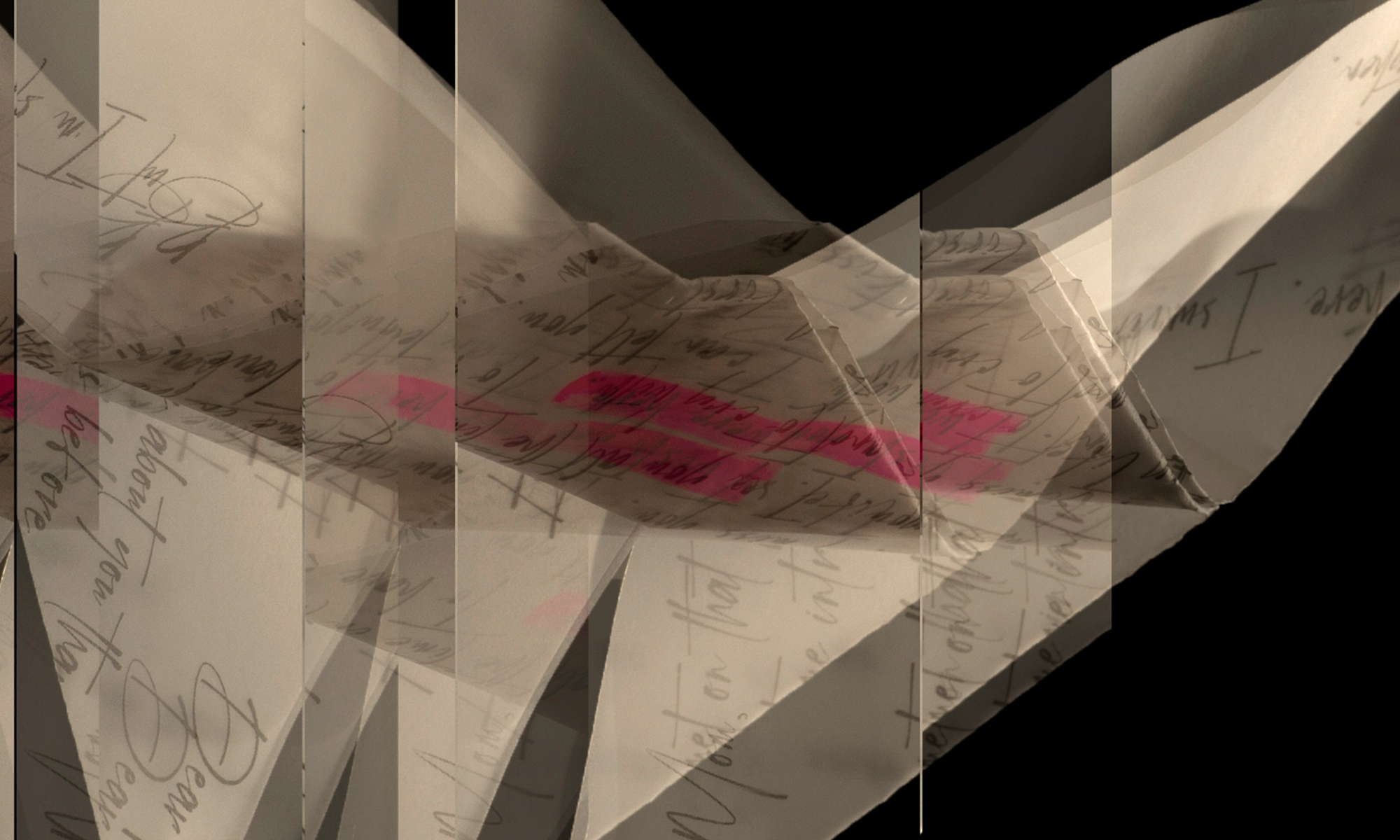
Fractured Liminality – Letter
Folded correspondence transformed through photographic and digital fragmentation.
Portrait: Reimagining Human Connection
The second panel, Portrait, begins with a hand-drawn portrait of my mother. Where Letter emerges from language, Portrait emerges from likeness — from the attempt to hold a face in line and memory.
Yet this portrait is also subjected to folding and transformation. Origami interrupts the conventions of portraiture, breaking the drawing into angular planes and shifting the image away from stable representation.
As the portrait folds into the form of a butterfly, the face fragments across multiple surfaces. Photography captures this unstable structure, while digital manipulation introduces additional distortion and pixelation.
The resulting work does not attempt to preserve a fixed likeness. Instead, it explores how intimacy persists even as images of the past become fragmented.
If Letter traces the movement from language to structure, Portrait traces the movement from likeness to abstraction.
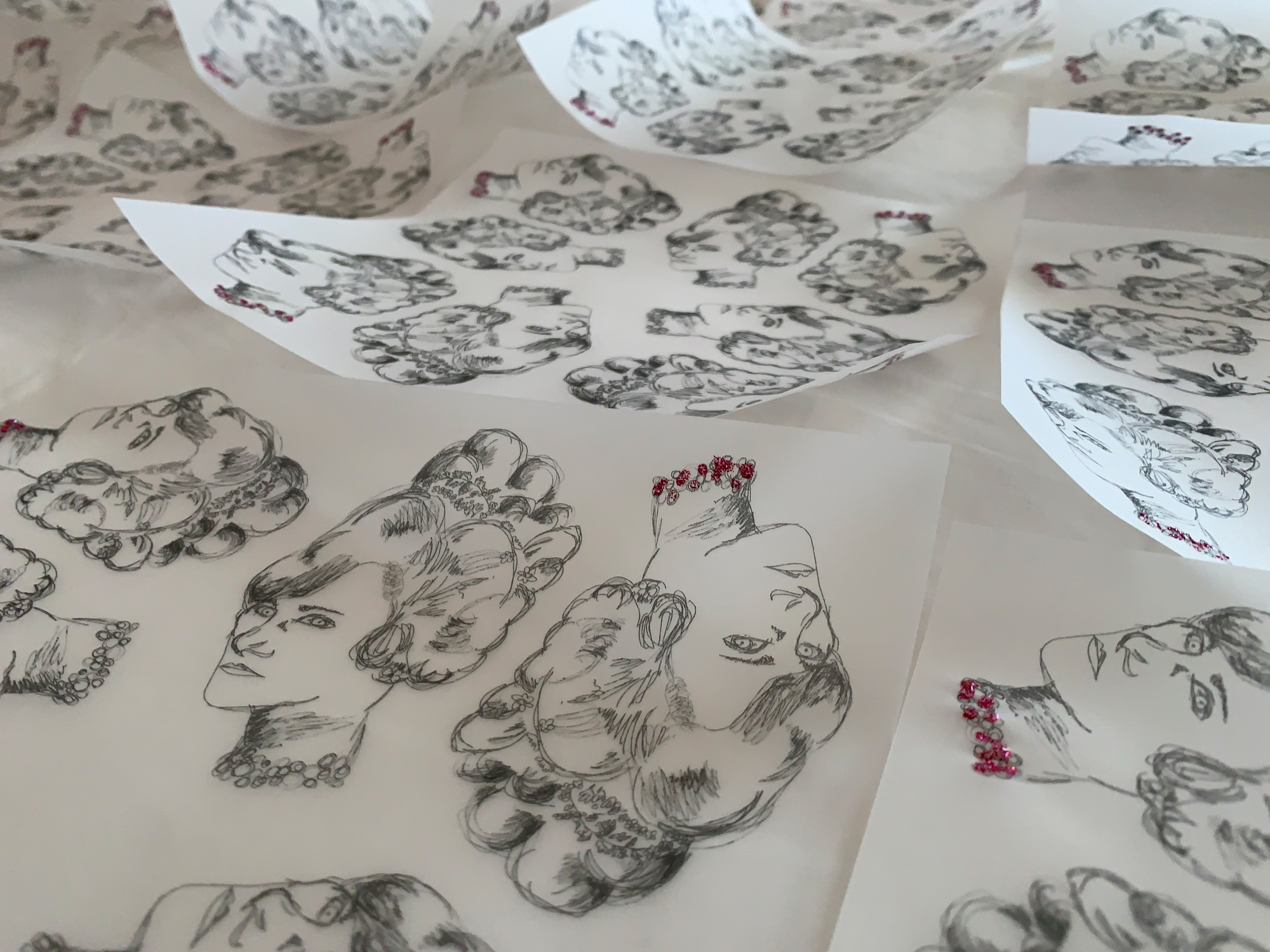
Portrait drawing before being folded into butterfly
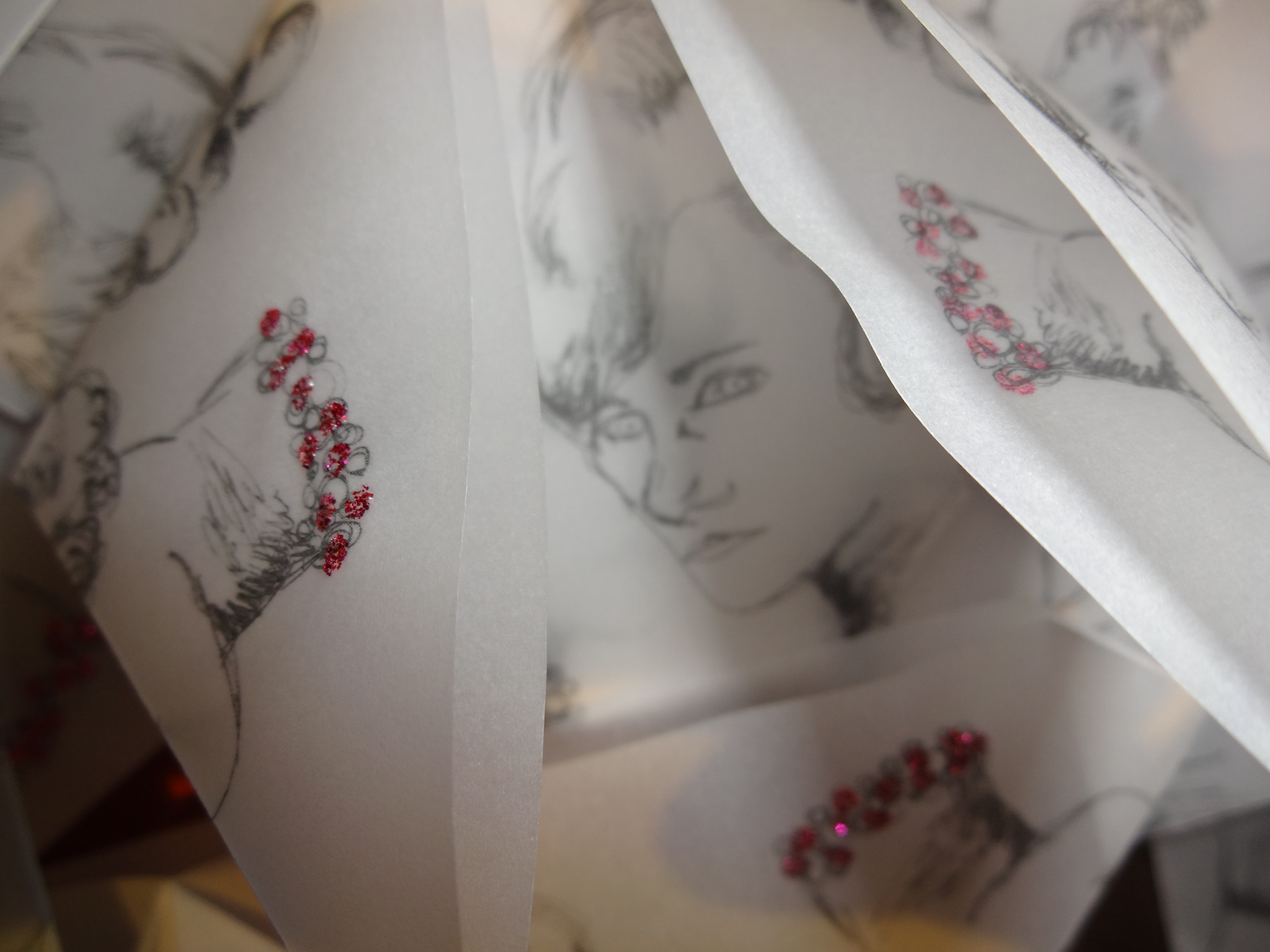
Detail of folded portrait surface
Folding, Photography, and Digital Fragmentation
Across both panels, folding acts as the first stage of transformation. It interrupts the flat surface of the document and introduces depth, tension, and concealment. Origami becomes a method of restructuring memory rather than preserving it.
Photography marks a second threshold. It records a brief equilibrium between artifact and object, between the intimacy of the original material and the autonomy of the artwork.
Digital manipulation forms the final stage of the process. Through fragmentation, pixelation, and reconstruction, the image is pushed further away from its source. These distortions are not decorative effects. They mirror the way memory itself shifts and recomposes over time.
In this sense, fragmentation is not damage. It is the condition through which the work becomes legible.
“In the pixels of our digital selves, we can find the patterns of our shared humanity.”
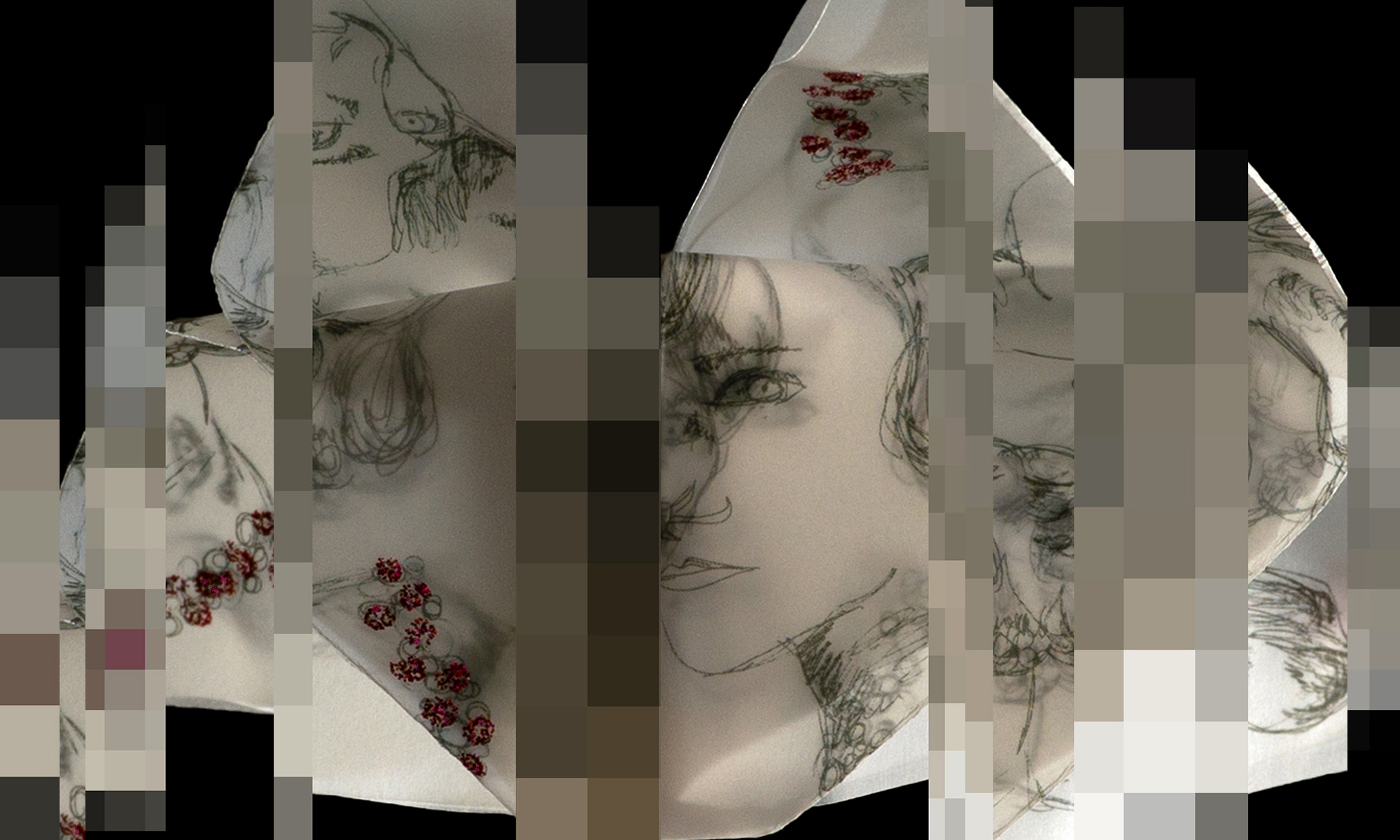
Fractured Liminality – Portrait
Hand-drawn portrait transformed through folding, photographic capture, and digital fragmentation.
Diptych: Two Structures of Memory
The diptych format is central to the work.
Letter begins with writing and moves toward structure.
Portrait begins with likeness and moves toward abstraction.
Together the works examine how personal memory persists when its original forms cannot remain intact. One panel holds the trace of a message that was never sent. The other holds the trace of a face that cannot be preserved unchanged.
Both works undergo the same sequence of transformation – folding, photography, and digital fragmentation – allowing the two images to speak to one another across difference.
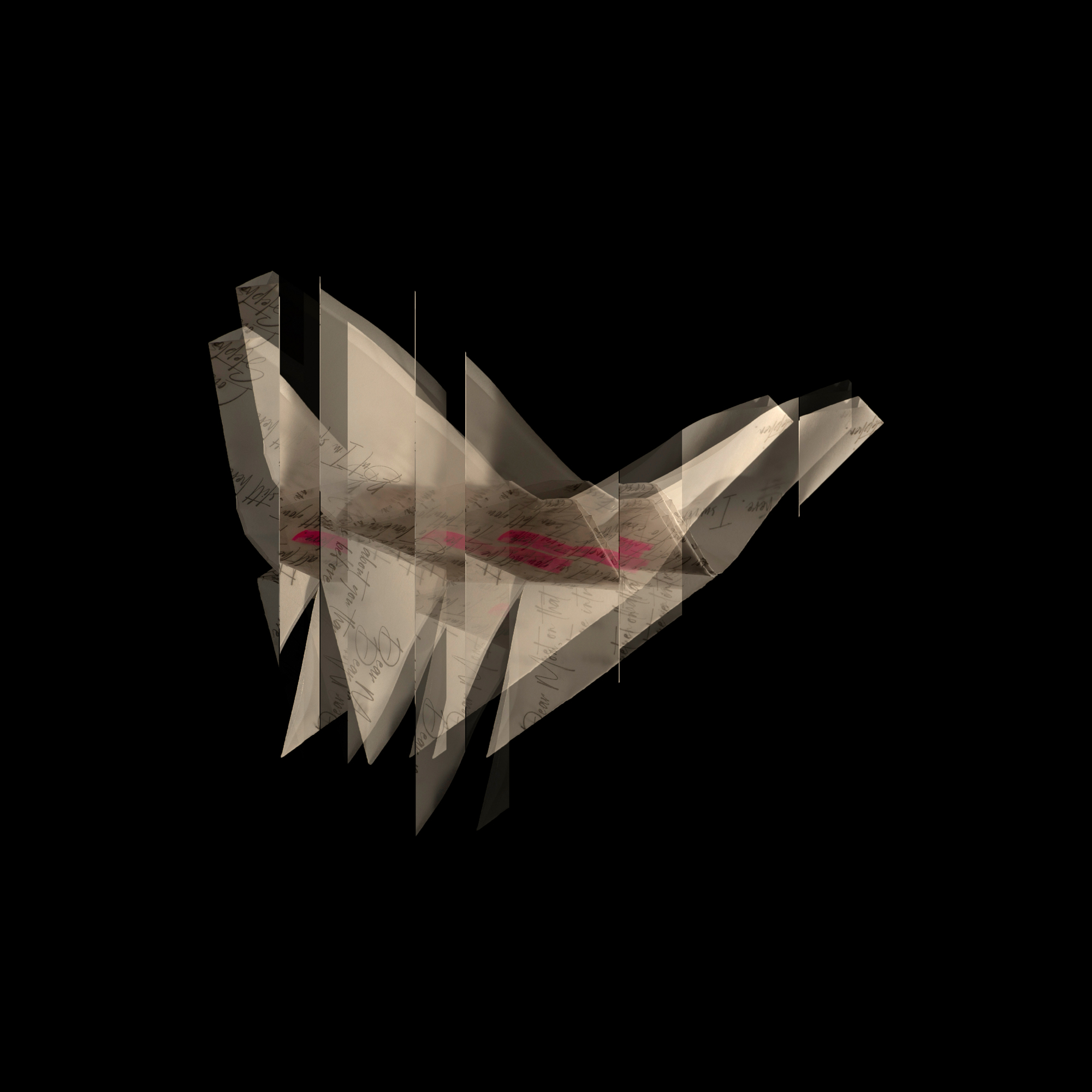
Fractured Liminality – Letter
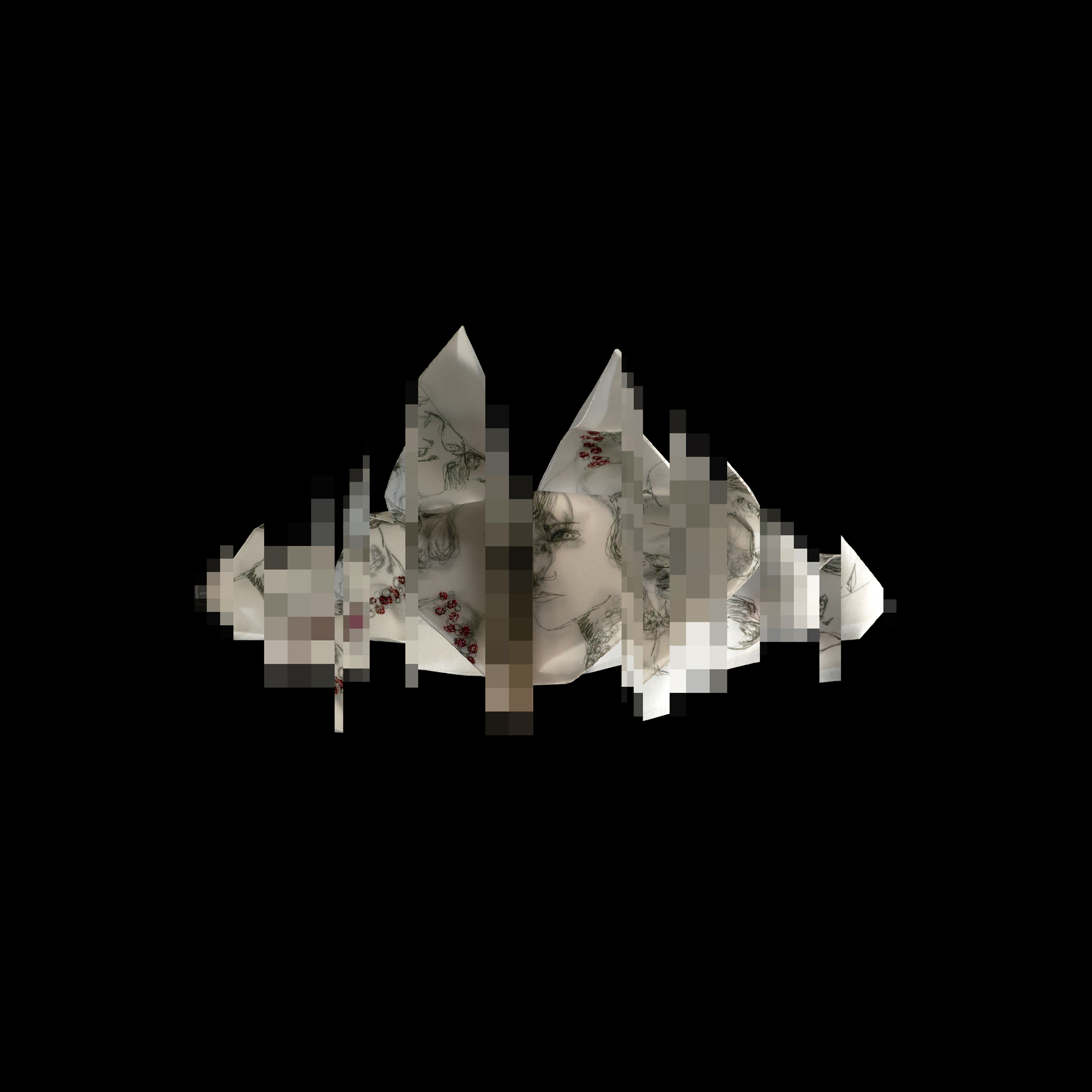
Fractured Liminality – Portrait
Fractured Liminality
The title describes a threshold condition shaped by fracture. The works exist between document and image, between personal artifact and autonomous artwork.
What begins as private material gradually becomes something more widely resonant. In the space between writing and image, between portrait and fragment, another form of connection emerges.
The diptych does not restore the past. It holds it in transformation, as something continuously reconfigured through memory, material, and image.
Fractured Liminality (Letter / Portrait)
Merit Award
Luxembourg Art Prize, 2024
Further Reading
Spectral Taxonomy – Marine Elegies
Explore the full body of work →
stephenrussellbrett.com/spectral-taxonomy
Studio Note
This text forms part of an ongoing studio research archive documenting the conceptual and material development of the Material Elegies body of work.