
Fugitive Landscapes is a collection shaped through sustained attention
to places that are passing, unstable or already beginning to disappear.
These paintings do not attempt to preserve landscape as image.
They remain with weather,
drift,
erosion,
and the quiet ways memory settles into place.
Each work asks whether noticing might itself become an act of care.
Available Works
Works from Fugitive Landscapes are released directly from the studio as they are completed.
For pricing, availability or further information about works from Fugitive Landscapes, please enquire via the contact page and include the artwork title in your message.
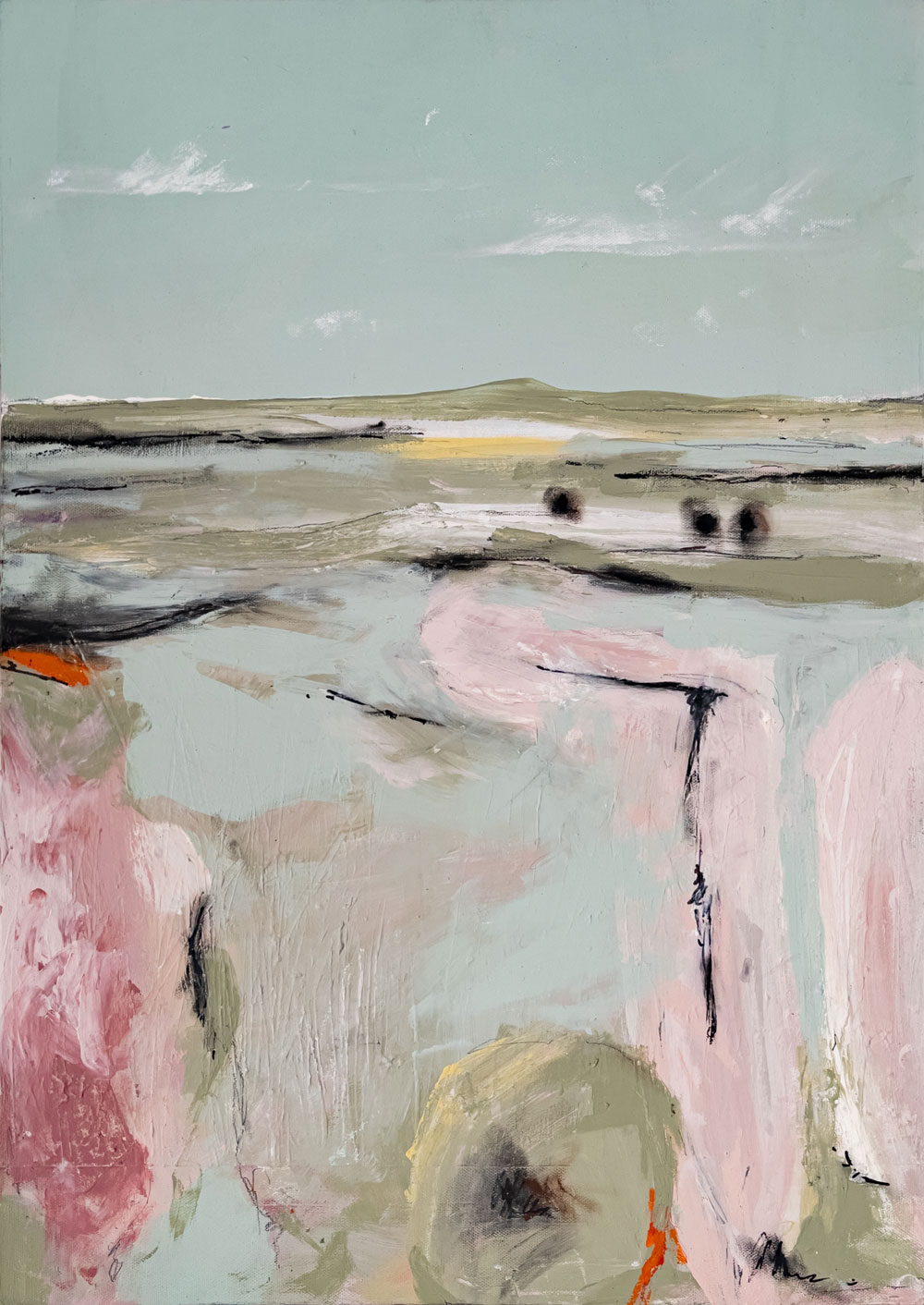
DRIFT
Fugetive Landscapes – Atmospheric Elegies, 2026
Mixed media on canvass
594 × 420 × 40 mm
Unique work
Status: Available
COLLECTION NOTES
Fugitive Landscapes explores places shaped by weather, drift and continual transformation.
Working with layered paint, graphite, abrasion and restrained material intervention, the paintings allow landscape to emerge slowly through accumulation, removal and memory. Rather than describing a specific location, each work remains attentive to atmosphere and the traces left by change.
Commenced: 2026 – Present
Status: Ongoing
Works: 3 completed
EXPLORE
→ Available for Acquisition: 1
→ Commission Enquiries
MATERIALS
Canvas, acrylic, graphite, washes, abrasion, layered paint application and selected material interventions.
FUGITIVE LANDSCAPES
Fugitive Landscapes extends Material Elegies from the intimate scale of flowers and paper into the wider experience of place.
These paintings begin not with location but with attention. Weather, tide, erosion and memory become collaborators in the making of the image. Through repeated layering, removal and restraint, the landscape gradually emerges before beginning to dissolve again.
Rather than describing a particular view, each painting remains attentive to atmosphere, to the unstable relationship between land, weather and remembrance. Forms appear only partially. Horizons drift. Colour is allowed to settle, recede and return. The image behaves less as a depiction than as a record of ongoing change.
Across the collection, landscape becomes both physical place and remembered place. The paintings ask how we inhabit environments that are continually transforming, and how attention might allow us to remain with those changes rather than resist them.
As with the other collections within Material Elegies, these works do not seek permanence. They offer quiet encounters with places held briefly before they shift again.
Fugitive Landscapes is part of Material Elegies, an ongoing practice exploring memory, transformation and the practice of attention through vulnerable materials.